
PP compounds for packaging and consumer use
Polypropylene (PP) is one of the most widely used polymers in packaging and consumer applications thanks to its balance of lightweight properties, durability, and cost efficiency. From food containers and flexible films to household appliances and everyday goods, PP compounds have established themselves as a preferred solution for manufacturers worldwide.
In recent years, the industry has increasingly moved toward customized PP compounds, where fillers, reinforcements, and functional additives are carefully selected to enhance performance. These modified grades can deliver greater strength, flexibility, barrier protection, and improved surface aesthetics meeting the diverse requirements of modern packaging and consumer markets.
To see how different fillers and additives influence the performance of polypropylene compounds, explore our detailed article on PP Compounds, which highlights key formulations and real-world applications.
Why PP Compounds for Packaging?
Key advantages of PP compounds in the packaging industry:
Lightweight: reduces raw material and transportation costs.
Relative transparency: suitable for food display and consumer appeal.
Chemical resistance: ideal for packaging in contact with oils, detergents, and active ingredients.
Food-grade safety: can be tailored to meet FDA and EU food-contact regulations.
Versatile applications: used in food containers, trays, bottles, pharmaceutical packaging, and flexible films for pouches and wraps.
Looking for a reliable PP compound supplier from Iran?GET FACTORY-DIRECT QUOTE & COA SAMPLE
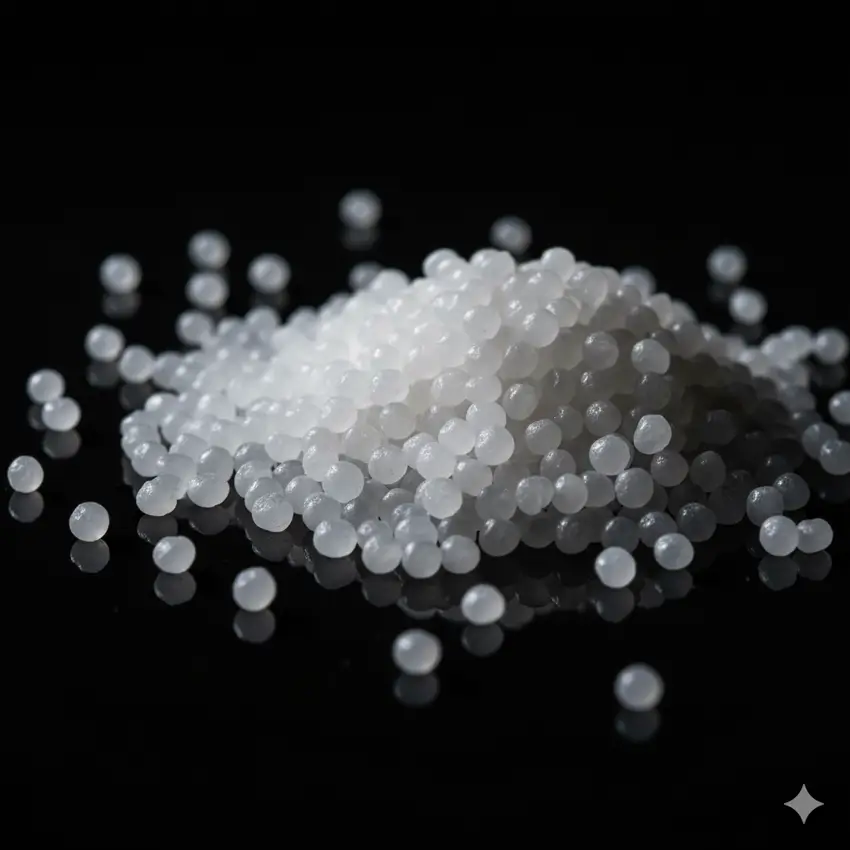
Iran’s Competitive Edge in Packaging Compounds 🇮🇷
While cost-efficiency is a global necessity, Iran offers a structural economic advantage few countries can match.
Direct Feedstock Access: As a major petrochemical hub, we benefit from direct, abundant, and low-cost access to the propane and propylene feedstock required for PP production.
Bypass Import Volatility: This strategic position allows Amizeh Polymer Spadana to bypass the volatility and high prices associated with importing raw materials.
Factory-Direct Pricing: The result is the ability to offer factory-direct pricing that is inherently more competitive than producers reliant on imported feeds.
Stable Supply: This advantage provides you with a stable, high-performance material supply that directly enhances your product margins and market position.
It’s an economic advantage rooted in geography and robust petrochemical infrastructure.
Quality Assurance: Food Safety and COA Verified
In packaging and consumer products, quality demands verifiable safety. Our commitment to you is rooted in transparency and our strict in-house adherence to safety benchmarks.
Prioritizing Food Safety: We recognize the paramount importance of material safety. Our specialized PP compounds are formulated using carefully vetted additives, and we focus on delivering grades that support compliance with the rigorous requirements of global food-contact regulations (e.g., those referenced by FDA and EU standards).
Safety Verification (MSDS): All export orders are accompanied by necessary Material Safety Data Sheets (MSDS/SDS), confirming compliance with global health and safety guidelines for handling and usage.
Data-Driven Confidence (COA): We ensure trust through precision, not just promise. Every batch shipped is accompanied by a detailed Certificate of Analysis (COA). This document provides the exact, in-house laboratory test results (like MFI, Density, and Impact Strength) for the material you receive, giving you full traceability and data-driven confidence in your supply chain.
Our laboratory protocol guarantees that your product maintains its mechanical integrity while confirming our materials are formulated to protect the end-user’s health and safety.
PP Compound Grades: Quick Guide to Packaging and Consumer Applications
Amizeh Polymer Spadana offers a wide portfolio of modified PP grades tailored for durability, safety, and cost control in consumer goods and packaging. The following table provides a concise overview of our key compound types, their primary benefits, and ideal applications in your industry:
Types of PP Compounds and Their Applications
| PP Compound Type | Key Benefits | Applications |
|---|---|---|
| CaCO₃-Filled PP | Cost efficiency, enhanced stiffness | Food containers, trays, household appliances |
| Talc-Filled PP | Dimensional stability, thermal resistance | Hot-fill food packaging, appliance housings, structural parts |
| Glass Fiber-Reinforced PP | High mechanical strength, thermal stability | Heavy-duty packaging, automotive components, electronics housings |
| Impact Modifiers & Antioxidants | Impact and UV resistance, reduced brittleness | Outdoor packaging, durable consumer goods, piping |
What are the benefits of polypropylene compounds in consumer products?
Polypropylene (PP) compounds are widely used in consumer products thanks to their unique combination of durability, design flexibility, and cost-effectiveness. These materials allow manufacturers to create lightweight, strong, and visually appealing items suitable for daily use. Why They Are Preferred in Consumer Products:
Design Flexibility: PP compounds can be easily molded into complex shapes, enabling innovative and ergonomic designs for household appliances, toys, and packaging.
Durability: High resistance to impact, wear, and environmental stress ensures long-lasting performance in products like vacuum cleaners, refrigerator parts, and kitchenware.
Cost Efficiency: Using fillers such as calcium carbonate or talc reduces production costs without compromising mechanical performance.
Chemical and Thermal Resistance: PP compounds withstand exposure to water, mild chemicals, and moderate heat, making them ideal for kitchen, bathroom, and personal care products.
Aesthetic Versatility: The material can be colored and finished in various textures, supporting attractive and consumer-friendly product designs.
- Applications: Home appliances, consumer packaging, toys, and personal care items.
What are the benefits of recycled PP compounds?
Recycled polypropylene (PP) compounds are becoming increasingly important in modern manufacturing due to their cost efficiency, environmental benefits, and regulatory compliance. By reusing post-consumer or post-industrial PP waste, manufacturers can produce high-quality materials while supporting a circular economy. Why Recycled PP Compounds Are Valuable:
Cost Reduction: Reprocessing PP waste reduces raw material costs and overall production expenses.
Environmental Sustainability: Lowers waste generation, reduces carbon footprint, and conserves natural resources.
Durability and Performance: Modern recycled PP compounds maintain excellent mechanical, thermal, and chemical properties, suitable for a wide range of applications.
Regulatory Compliance: Helps manufacturers meet international standards and regulations, including EU packaging directives and other sustainability requirements.
What are the common technical challenges in filled PP compounds?
Polypropylene (PP) compounds offer excellent performance, but incorporating fillers and additives can introduce technical challenges that need careful management.
Common Challenges:
Reduced Transparency: Filled PP compounds, such as those with CaCO₃ or talc, often have lower optical clarity compared to virgin PP.
Decreased Impact Resistance: High filler content may reduce toughness and make the material more brittle under stress.
Filler Uniformity: Uneven dispersion of fillers can lead to inconsistencies in mechanical properties and surface finish.
Solutions & Best Practices:
Coupling Agents: Enhance adhesion between fillers and the PP matrix, improving mechanical performance.
Impact Modifiers: Restore or improve toughness in filled PP compounds.
Quality Control of Fillers: Ensuring consistent particle size, shape, and distribution of CaCO₃, talc, or other fillers is critical for uniform performance.
Optimized Formulation: Balancing filler content and additive type allows manufacturers to maintain desired properties without compromising cost efficiency.
By addressing these challenges, PP compounds can achieve consistent quality, mechanical reliability, and aesthetic performance, making them suitable for a wide range of industrial and consumer applications.
What are the market trends for PP compounds in packaging?
Rising Demand for Flexible Packaging: Lightweight films and pouches made from PP compounds are increasingly preferred in food, beverage, and pharmaceutical industries due to their durability and cost-effectiveness.
Shift Toward Eco-Friendly Materials: Manufacturers are adopting recyclable and bio-based PP compounds to meet sustainability goals and consumer expectations.
Customization & Additives: Growth in modified PP compounds, such as CaCO₃-filled and talc-filled grades, is helping improve performance while keeping costs competitive.
Smart Packaging Applications: Enhanced PP compounds are being used for packaging that requires better barrier properties, UV resistance, and longer shelf-life.
Regional Growth Opportunities: Countries like Iran are becoming key suppliers of cost-competitive PP compounds for regional and international packaging markets.
Food-Grade & Safety Regulations: Increasing global focus on food-safe and FDA/EU-approved PP compounds is shaping production and export trends.
Why choose Amizeh Polymer Spadana for PP compounds in packaging and consumer products?
At Amizeh Polymer Spadana, we deliver specialized PP compounds for the packaging and consumer goods industries. Our solutions are designed to combine performance, safety, and cost-effectiveness.
Wide Product Range: CaCO₃-filled PP, talc-filled PP, impact-modified compounds, and food-grade solutions.
Application Versatility: Suitable for flexible packaging, rigid containers, and household consumer products.
Quality & Standards: Developed to meet international benchmarks for food safety, durability, and eco-friendliness.
Customization: Tailored grades to match customer-specific requirements and end-use applications.
Competitive Advantage: High-performance materials at cost-efficient prices, positioning Iran as a strong regional supplier.
Contact us today to request datasheets, technical consultation, or competitive bulk quotations.
Order & Export Transparency: Logistics and Lead Time
We prioritize clarity to simplify your buying process for packaging materials. Here are the core export conditions:
Minimum Order Quantity (MOQ): Starts at 1 to 5 Metric Tons (MT) for standard PP compounds, allowing flexibility for small-to-mid-size packaging and consumer projects.
Custom Formulations: For specialized food-grade or high-impact consumer product compounds, the minimum is generally 10 MT to ensure batch consistency.
Production Lead Time (EXW): Typically 2 to 3 weeks from order confirmation.
Logistics & Incoterms: We facilitate shipments using FOB or CFR terms, packed securely in 25 kg sacks or 1,000 kg Bulk Bags (FIBCs) for efficient global transport.
Goal: To provide a predictable, stable supply chain that supports your high-volume manufacturing schedule.
Frequently Asked Questions (FAQ)
Do your PP compounds meet specific food-contact regulations?
Our compounds are formulated with carefully vetted additives to support compliance with major global food-contact safety regulations (e.g., FDA and EU standards). We provide the necessary technical data and COA to assist you in achieving final product certification.
What specific technical support is provided after purchase?
We offer comprehensive technical consultation, including advice on optimizing our compounds for your specific molding, extrusion, or thermoforming process. This ensures zero production deviation and efficient machine run-time.
Can PP compounds handle high temperatures and chemicals?
Yes. Properly formulated PP compounds provide thermal and chemical resistance, making them suitable for kitchenware, appliance parts, and chemical-resistant packaging
Can you provide precise color matching for my consumer brand?
Yes. We use high-precision spectrophotometers and masterbatch solutions to ensure precise, uniform, and repeatable color matching (RAL or Pantone) across all batches, critical for maintaining your brand identity.
Can you modify a compound for better UV resistance in outdoor consumer goods?
Absolutely. We specialize in incorporating robust UV stabilization packages (e.g., HALS and UV absorbers) into the compound during manufacturing to extend the durability and prevent color fade in outdoor consumer applications.
Looking for premium PP compounds designed for your applications?
Contact us now. our experts are ready to guide you
Explore more about our polymer solutions on our Home Page.