
Buy Iran HDPE & LDPE (7000F, BL3, 2420D) | Manufacturer Price & Specs
In today’s fast-paced plastic industry, success isn’t just about manufacturing; it’s about making the right product choice under market pressure. As global demand shifts, Iran has emerged as a premier hub for high-performance polymers, offering HDPE and LDPE grades that redefine the balance between premium quality and competitive pricing. For businesses looking to scale, these materials are no longer just “options” they are strategic assets that drive production efficiency and product durability.
To stay ahead, professionals must align their sourcing with the latest PE compounds benchmarks and evolving technical standards. Whether you are tackling the complexities of high-load industrial piping with HDPE BL3 or the delicate requirements of medical-grade packaging with LDPE 2420D, the technical “DNA” of your raw material dictates your market reputation. At Amizeh Polymer Spadana, we don’t just supply polymers; we provide the technical intelligence and supply chain stability you need to dominate your sector. This specialized guide breaks down the essential Iranian grades 7000F, BL3, 2420D, and EX5 equipping you with the data to turn your sourcing into a competitive masterpiece.
In a market where a slight deviation in MFI can ruin a production run, Amizeh Polymer Spadana provides the technical precision that transforms these raw materials into your competitive masterpiece.
What makes Iran a key hub for HDPE & LDPE grades?
With its advanced petrochemical industry, Amizeh Polymer Spadana and other producers supply high-quality polyethylene grades for both domestic and export markets.

Iran HDPE vs LDPE: Key Differences
High-Density Polyethylene (HDPE) and Low-Density Polyethylene (LDPE) are two essential members of the polyethylene family. HDPE is valued for its high strength, stiffness, and chemical resistance, making it a preferred material for pipes, containers, and heavy-duty packaging. LDPE, in contrast, is softer and more flexible with excellent impact resistance and clarity, which makes it ideal for films, coatings, and lightweight packaging solutions.
If you’d like a deeper look at the types and industrial applications of HDPE, check out our article on HDPE compounds for industrial use in Iran.
Structural Differences Between HDPE and LDPE
The key difference between these two types of polyethylene lies in their molecular structure. HDPE has a linear, tightly packed structure with minimal branching, resulting in higher density and tensile strength. LDPE features a highly branched structure, which reduces its density and gives it superior flexibility and transparency. These structural distinctions directly influence their processing methods, performance characteristics, and end-use applications.
For more insights into flexible LDPE grades and where they’re used, visit LDPE compounds in Iran.
Why Technical Accuracy Matters
This guide is backed by the laboratory expertise of Amizeh Polymer Spadana. We don’t just list specs; we ensure that every batch of 7000F or BL3 we supply matches these rigorous benchmarks, giving you the stability needed for high-speed manufacturing.
Role of Iranian Producers and Amizeh Polymer Spadana
Iran is one of the largest petrochemical hubs in the Middle East and supplies a wide range of HDPE and LDPE grades for both domestic and export markets. Companies like Amizeh Polymer Spadana have become key players by producing and exporting high-quality polyethylene compounds that meet international standards. Their diversified product portfolio covering grades such as 7000F, BL3, 2420D, and EX5 ensures that manufacturers across packaging, construction, and industrial sectors receive reliable and cost-effective materials tailored to their needs.
Iran HDPE & LDPE Technical Overview
| Feature | HDPE (High-Density Polyethylene) | LDPE (Low-Density Polyethylene) |
|---|---|---|
| Density (g/cm³) | 0.941 – 0.965 | 0.910 – 0.940 |
| Melt Flow Index (MFI) | Lower, suitable for extrusion and molding | Higher, ideal for flexible films and packaging |
| Flexibility | Stiffer and more rigid | Flexible and stretchable |
| Tensile Strength | Higher, suitable for pipes, containers, and tanks | Lower, suitable for films and lightweight packaging |
| Typical Applications | Pipes, tanks, containers, geomembranes | Films, packaging, squeeze bottles, bags |
| Molecular Structure | Linear and dense | Branched and less dense |
| Iranian Manufacturers | Amizeh Polymer Spadana and other domestic producers | Amizeh Polymer Spadana and other domestic producers |
Explanation:
This comparison helps buyers clearly identify which polyethylene grade suits their industrial needs. HDPE offers strength and rigidity for durable applications, while LDPE provides flexibility and stretchability for packaging and film products. Both grades produced in Iran, including by Amizeh Polymer Spadana, meet international quality standards and are ready for domestic and export markets.
Iran PE Grades: Detailed Specifications
Choosing the right polyethylene grade is the bridge between a standard product and a market-leading one. While the Iranian petrochemical market offers a wide variety of polymers, grades like 7000F, BL3, 2420D, and EX5 have become the industry benchmarks due to their consistent MFI, stable density profiles, and superior processability.
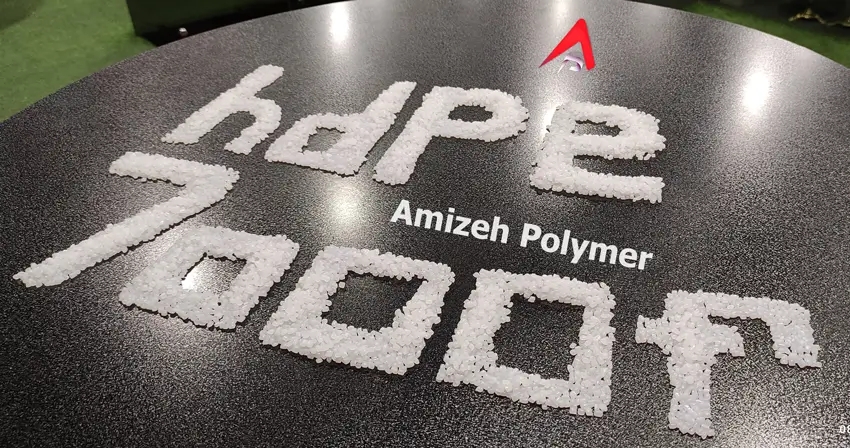
Iran HDPE 7000F: Technical Specs & Applications
Physical & Technical Properties: Density 0.945–0.955 g/cm³, MFI 0.3–0.5 g/10 min, High tensile strength.
Typical Industrial Applications: Ideal for thin films, packaging sheets, and containers requiring strength and durability.
Advantages: Excellent rigidity and chemical resistance, suitable for applications where dimensional stability is critical. 7000F is engineered for high-strength, ultra-thin film production. For your business, this means reducing raw material consumption while maintaining superior durability ultimately leading to higher yield and increased profitability per ton.
HDPE BL3 Iran: Properties & Industrial Uses
Key Features & Technical Specs: Density 0.950–0.960 g/cm³, MFI 0.2–0.4 g/10 min, High impact strength.
Common Uses: Pipes, bottles, industrial parts, and heavy-duty molded products. With its exceptional Environmental Stress Crack Resistance (ESCR), BL3 is the gold standard for high-pressure pipes and industrial tanks. It guarantees a long service life and structural integrity, reducing long-term maintenance costs and protecting your brand’s reputation for reliability.
Processing Tips: Maintain proper extrusion temperature to avoid degradation; compatible with standard HDPE processing equipment.
LDPE 2420D Iran: Characteristics & Applications
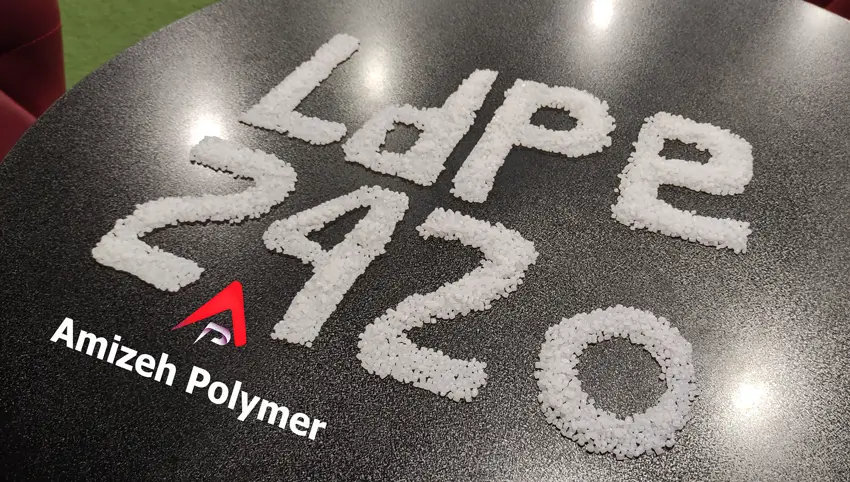
Mechanical & Technical Properties: Density 0.920–0.930 g/cm³, MFI 2–4 g/10 min, Flexible and soft.
Industrial Applications: Films, wire and cable coatings, sheets, and light packaging.
Popularity Reason: Excellent flexibility, good sealing properties, widely used in the packaging industry. Beyond its technical sealability, 2420D offers unmatched optical clarity. It is the perfect choice for luxury packaging where aesthetics are key; it ensures your product shines on the retail shelf, giving you a competitive edge in premium markets.
LDPE EX5 Iran: Features & Market Applications
Key Characteristics: Density 0.915–0.925 g/cm³, MFI 3–5 g/10 min, High elongation and toughness.
Application Areas: Agricultural films, flexible coverings, stretchable packaging.
Selection Notes: Best suited for applications requiring stretchability and moderate strength; compatible with standard LDPE extrusion lines. EX5 provides the perfect equilibrium between toughness and processability. By choosing EX5, you significantly reduce the wear and tear on your extrusion machinery, lowering downtime and maintenance expenses while ensuring high-speed, stable production.
Comparison of Top Iranian PE Grades: Technical Specs & Business Value
| Grade | Density (g/cm³) | Primary Applications | Competitive Edge (Business Value) |
|---|---|---|---|
| HDPE 7000F | 0.945–0.955 | Ultra-thin films, high-strength bags | Maximizes profit margins by reducing material usage per bag without losing strength. |
| HDPE BL3 | 0.950–0.960 | Industrial pipes, bottles, heavy-duty containers | Minimizes long-term liability with superior stress crack resistance (ESCR) for durable piping. |
| LDPE 2420D | 0.920–0.930 | Luxury packaging, shrink wraps, cable coating | Ensures premium shelf presence with unmatched optical clarity and high-speed sealability. |
| LDPE EX5 | 0.915–0.925 | Agricultural films, stretch wraps, flexible covers | Lowers operational costs by reducing machinery wear and tear during high-speed extrusion. |
Iran PE Grades Quality & Sourcing
All HDPE and LDPE grades discussed in this guide are produced and supplied according to international quality standards. Each batch undergoes strict in-house testing to ensure consistent properties such as density, tensile strength, and flexibility.
All HDPE and LDPE grades are produced under strict quality controls to meet international standards. For projects requiring tailored polyethylene compounds, learn more about our custom polyethylene compounding solutions in Iran.
How to Choose the Right Grade for Your Project
Selecting the appropriate polyethylene grade is crucial for ensuring optimal performance and longevity in your applications. Here are the key factors to consider:
Intended Application: Identify whether the material will be used for packaging, pipes, cables, agricultural films, or industrial components. Different grades offer specific properties suited to each use.
Mechanical Requirements: Consider tensile strength, flexibility, and impact resistance needed for your project. HDPE and LDPE grades vary significantly in these characteristics.
Regulatory Compliance: Check if the material must meet food-contact standards, REACH, or other industry-specific regulations.
Environmental Conditions: Assess temperature, UV exposure, and chemical contact the material will face. Some grades are more resistant to heat, sunlight, or chemicals than others.
- Depending on your project needs, you may also consider other polyethylene types such as LLDPE for enhanced flexibility and durability. Learn more at LLDPE compound supplier from Iran.
Practical Tips
Match the grade to your most demanding requirement; for example, use HDPE for high-strength piping and LDPE for flexible films.
Consult technical datasheets to compare properties, but focus on the application-relevant metrics.
When in doubt, seek guidance from material experts to ensure the chosen grade aligns with your operational and regulatory needs.
This approach helps ensure that your project benefits from the right combination of performance, durability, and compliance.
Choosing the right HDPE and LDPE grades can significantly improve product performance, manufacturing efficiency, and regulatory compliance. The grades covered in this guide from HDPE 7000F and BL3 to LDPE 2420D and EX5 offer reliable quality, versatile applications, and proven results for packaging, pipes, films, cables, and more.
If you’d like more detailed information about pricing, specifications, or ordering processes, our team is ready to help.
Contact us today to discuss your needs and get expert guidance on selecting the best grade for your project.
Frequently Asked Questions (FAQ)
Are these grades produced according to international standards?
Yes. All grades mentioned here are manufactured in Iran under strict quality control to meet global standards for consistency and performance.
How can I choose the right grade for my project?
Start by considering your application (film, pipe, cable, etc.), required mechanical properties (strength, flexibility), and regulatory needs. If unsure, our technical team can advise on the best fit.
What's the price difference between Iran HDPE grades?
Iran HDPE grades typically vary by 5-15% in price depending on technical specifications. HDPE 7000F is generally positioned in the mid-range, while BL3 commands premium pricing due to its specialized pipe applications. LDPE grades like 2420D and EX5 are usually more cost-effective for packaging applications. For current pricing and detailed quotations, contact Amizeh Polymer Spadana directly as prices fluctuate based on raw material costs and market conditions.
How do I request samples of these grades?
To request samples of Iran HDPE or LDPE grades, contact Amizeh Polymer Spadana with your specific requirements including intended application, processing conditions, and quantity needed for testing. Sample requests typically require technical specifications of your project and may involve nominal shipping costs. Samples are usually provided within 1-3 days depending on availability and destination country.
What are the minimum order quantities?
Minimum order quantities for Iran HDPE and LDPE grades typically range from 20-25 metric tons per grade for export orders, and 5-10 tons for domestic orders. However, MOQs can vary based on grade availability, market conditions, and customer requirements. Mixed container loads may be possible for smaller quantities. Contact our sales team to discuss flexible ordering options for your specific needs.
Which grade is most cost-effective for packaging?
For packaging applications, LDPE 2420D offers excellent cost-effectiveness due to its balance of flexibility, processing ease, and competitive pricing. HDPE 7000F provides better value for rigid packaging requiring strength. LDPE EX5 is most economical for stretch films and agricultural packaging. The choice depends on your specific packaging requirements – film thickness, strength needs, and production volumes all impact cost-effectiveness.
For a complete overview of our polyethylene solutions and company profile, visit our [Home Page].
Are these grades available for export orders?
Absolutely. Amizeh Polymer Spadana supplies HDPE and LDPE grades worldwide under strict quality standards. contact us to discuss your order.