
A Technical Guide to Glass-Filled PP Compounds for Automotive Parts
The modern automotive sector is fundamentally driven by the dual mandates of efficiency and performance. Engineers must reduce vehicle weight to meet stringent fuel economy and emissions standards, all while enhancing structural integrity and safety. Standard Polypropylene (PP) fails to deliver the high mechanical performance required for load-bearing and thermal applications. This critical gap is expertly closed by Glass-Filled PP Compounds (PP-GF), positioning them as the polymer solution of choice for durable, cost-optimized, and lightweight automotive components.
Don’t compromise performance. Request a Free Technical Consultation now to specify the ideal Glass-Filled PP grades for your next structural application.
What is Glass-Filled (GF) Polypropylene?
Glass-Filled Polypropylene (PP-GF) is a high-performance thermoplastic composite engineered by structurally reinforcing a PP base resin with short glass fibers. This process moves PP from a commodity material into the realm of engineered plastics.
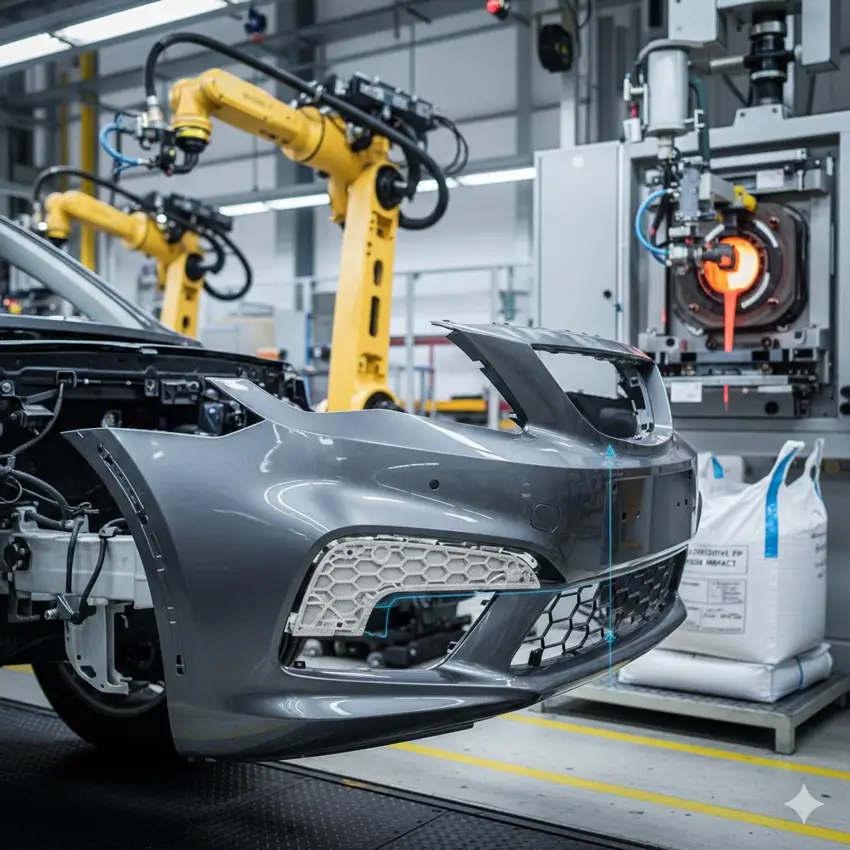
The Science of Compounding
The Matrix: The base Polypropylene (typically a specialty copolymer) provides chemical resistance and excellent flow characteristics during processing.
The Reinforcement: Short Glass Fibers (SGF) are compounded into the matrix. The key to successful PP-GF lies in the fiber-matrix interface. Advanced chemical coupling agents (or sizing) are utilized to ensure optimal adhesion, allowing mechanical stress to be efficiently transferred from the polymer to the high-strength glass fiber.
The Outcome: This high-shear compounding process results in a material with profoundly altered physical properties, ready to withstand demanding environments.
The fiber reinforcement significantly limits the molecular movement of the polymer chains, fundamentally improving the material’s elastic modulus and thermal resistance, making it essential for polypropylene automotive applicati
Key Technical Advantages of Using PP-GF Compounds
The engineered properties of PP-GF compounds address core challenges faced by automotive designers, particularly concerning structural stability and thermal management.
Superior Heat Resistance & Dimensional Stability
Maintaining component geometry under extreme thermal cycling is a prerequisite for safety and function.
Elevated HDT for Thermal Management: The fibers act as an internal scaffolding structure that substantially elevates the Heat Deflection Temperature (HDT). This ensures that components retain their load-bearing capacity and structural rigidity when exposed to the high temperatures found under the bonnet.
Reduced CLTE for Tolerance Maintenance: Glass reinforcement drastically reduces the Coefficient of Linear Thermal Expansion (CLTE). This dimensional stability is crucial for large parts (e.g., instrument panels, door carriers) to prevent warping, squeaking, and panel gap inconsistencies across varying cabin temperatures.
Enhanced Load-Bearing Capacity and Rigidity
PP-GF provides the necessary mechanical strength to support structural functions.
Increased Flexural Modulus: The Flexural Modulus (stiffness) is significantly enhanced, enabling the use of PP-GF in components that require minimal deflection under load. This directly contributes to vehicle stiffness and crash performance.
Optimized Impact Resistance: While increasing rigidity, the compounding process is carefully controlled to deliver excellent Impact Strength—a critical balance needed for energy-absorbing parts like bumper supports.
Cost-Effectiveness vs. Traditional Materials (e.g., Metal, PA6)
The primary strategic advantage of PP-GF is its ability to reduce overall manufacturing cost without sacrificing performance.
Metal Replacement Strategy: Leveraging PP-GF allows for complex parts integration via single-shot injection molding. This eliminates secondary operations (welding, machining, assembly) required for metal fabrication, resulting in significant total system cost reduction and further contributing to vehicle weight reduction.
Value vs. Engineering Plastics: PP-GF offers a powerful cost-performance profile compared to higher-priced engineering plastics like Nylon (PA6). With lower material cost and superior processing characteristics (e.g., lower density and less moisture sensitivity), PP-GF often provides a compelling economic alternative.
| Factor | Glass-Filled PP (PP-GF) | Traditional Metal (e.g., Aluminum) |
|---|---|---|
| Cost & Processing Efficiency | Low material cost; Fast, single-step injection molding. | High system cost; Slow, multi-step machining/welding. |
| Design & Weight Savings | Maximum weight reduction; High functional integration. | High weight; Low integration (requires multiple assemblies). |
| Performance & Durability | Excellent corrosion resistance; Superior Dimensional Stability (CLTE). | Good ultimate strength; Poor resistance to corrosion/chemicals. |
Common Automotive Applications for Glass-Filled PP
The wide range of properties in PP-GF compounds allows for their deployment across the vehicle’s structural and non-structural zones.
Bumpers and Structural Carriers
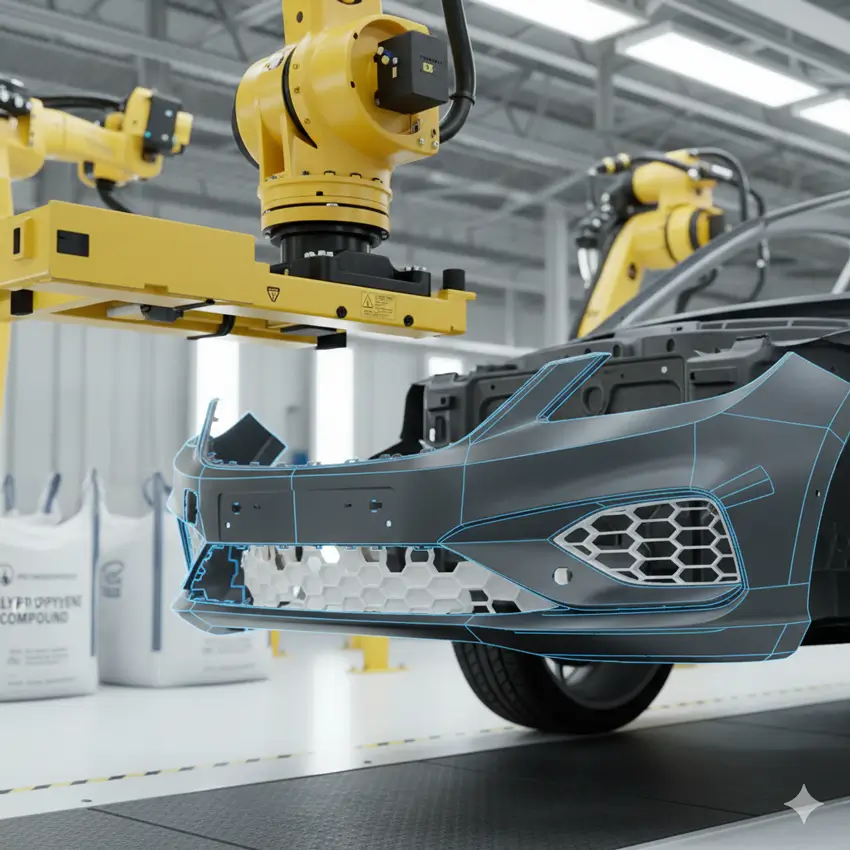
These parts require high impact resilience and dimensional integrity, making high-percentage PP-GF grades the ideal choice.
Bumper Energy Absorbers: Used in internal bumper components to manage and absorb crash energy efficiently.
Front-End Modules (FEMs): Structural carriers that integrate lighting, cooling, and bumper systems, demanding high stiffness and thermal resilience.
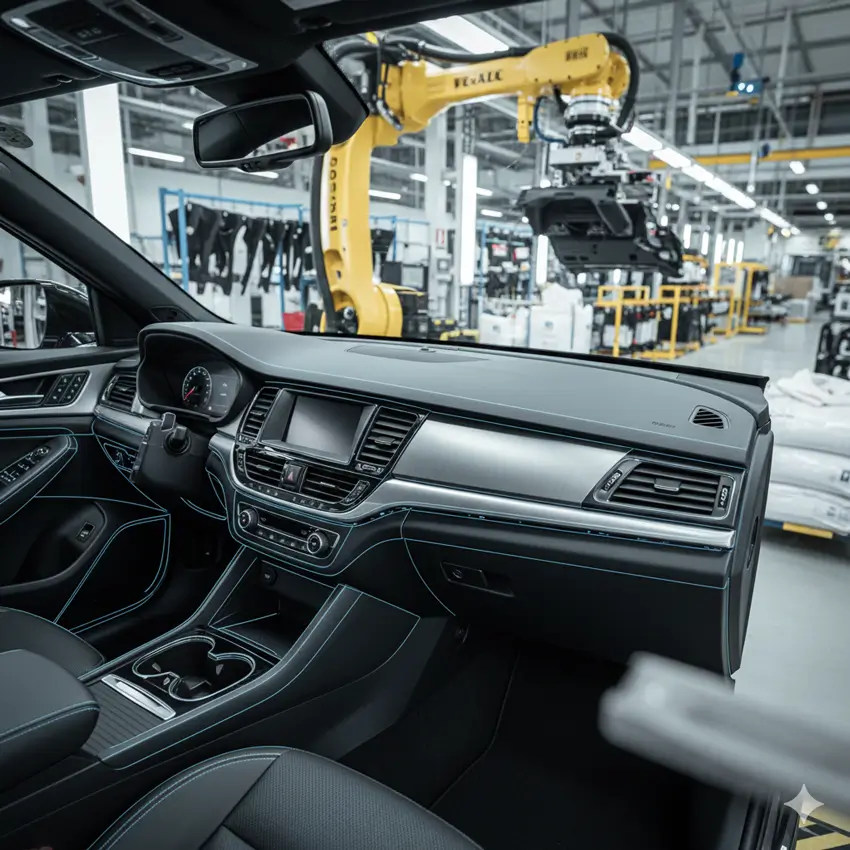
Dashboards and Interior Trim
In the cabin, PP-GF ensures long-term fit, finish, and safety.
Instrument Panel Carriers: The main structure supporting the dashboard requires minimal CLTE to maintain precise clearances and prevent NVH issues.
Door Module Carriers: Integrated panels requiring rigidity and excellent moisture resistance
Under-the-Hood Components (e.g., Fan Shrouds)
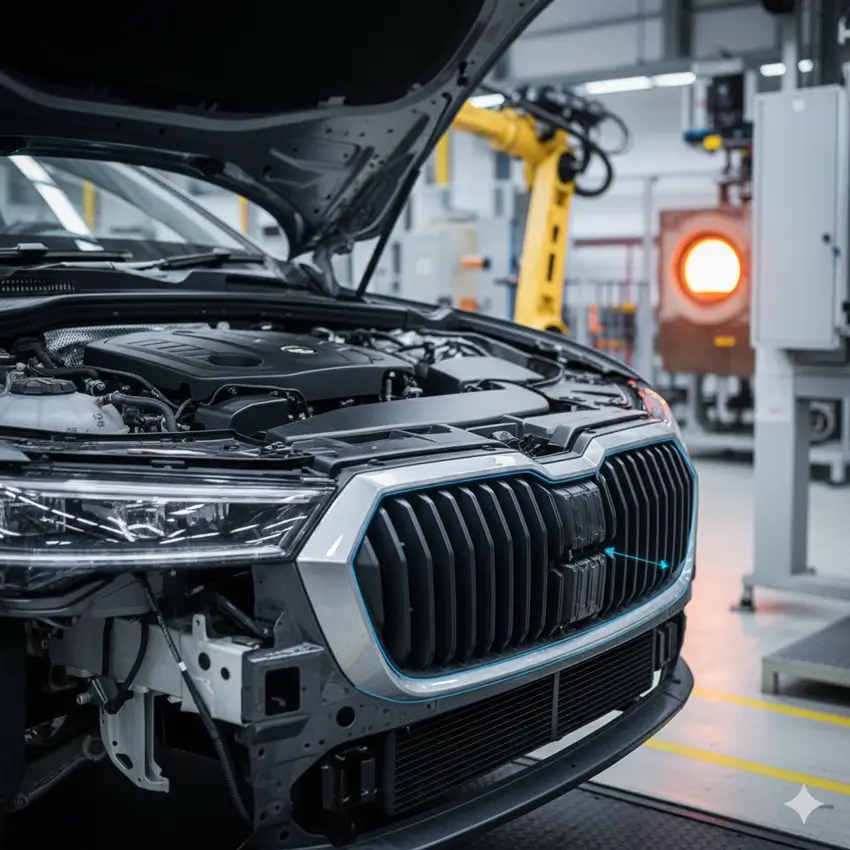
This is the most thermally challenging area, where PP-GF’s enhanced HDT capability is non-negotiable.
Fan Shrouds and Cooling System Components: Parts operating in continuous high-heat environments where thermal deformation would compromise engine cooling.
Air Intake Manifolds: Specialized PP-GF grades can withstand operational temperatures while offering significant weight savings over metal counterparts
Sourcing & Specification: What to Look for in an Automotive-Grade Supplier
Sourcing automotive-grade Glass-Filled PP requires rigorous due diligence and a focus on consistency over price. The buyer’s scrutiny must extend beyond the quoted price to the supplier’s technical control.
Evaluating the Technical Data Sheet (TDS): The buyer must treat the TDS as the fundamental contract for the material. Key properties to verify include:
HDT (Thermal Performance): Must meet or exceed the maximum service temperature of the component.
Flexural Modulus and Tensile Strength: Confirming the load-bearing capacity for structural simulations.
Melt Flow Index (MFI): To ensure optimal flow characteristics and tool filling for the intended part geometry.
Ensuring Batch Consistency: The greatest challenge in PP-GF supply is maintaining consistent fiber length, distribution, and overall quality from batch to batch. A top-tier supplier demonstrates authority through stringent ISO quality control protocols. Watch our [Production Line & QC Videos] to see our strict quality measures.
Specialized Compounding Technology: Look for suppliers who utilize advanced compounding methods designed specifically to maximize fiber integrity and dispersion, ensuring the physical properties translate effectively into the final molded part.
The Spadana Polymer Compound technical team specializes in producing glass-filled PP compounds for precise industrial and automotive applications. To view our specialized grades or request technical consultation, please visit the pages below:
To view our specialized grades or request technical consultation, please visit the pages below:
View Specialized Automotive PP Grades Explore Our Comprehensive Polypropylene Compound Solutions